
6th Jun 2026
Protecting the television in a client's home: a guide to TV screen protectors
Understand the options to protect a television from damage in challenging environments — what each product does, who it suits, and how to choose.
Who this guide is for:
Disability Support Workers assisting clients to obtain goods and services, and Allied Health professionals (OTs, support coordinators, behaviour support practitioners) assessing equipment needs for people with disability in home, SDA, or supported accommodation settings.
For many people with disability, the television is far more than entertainment.
It's a communication tool, a source of routine and comfort, and — in settings where a person has limited mobility or social contact — one of the most important pieces of technology in their home.
When a television screen is damaged, whether through an accidental knock, a behavioural incident, an object thrown in frustration, or simply the rough and tumble of daily life in a supported environment, the consequences go beyond a cracked panel. There's the cost of replacement, the disruption to routine, and in some settings, the safety risk of broken glass and sharp edges.
TV screen protectors from Maximise Technology are designed specifically to prevent this. The range covers two distinct types of screen protection — a heavy-duty full enclosure and a flat screen protector — each suited to different environments and risk levels.
Two types of protection: understanding the difference
Choosing the right product starts with understanding what each type actually does. The two categories have meaningfully different levels of protection, installation footprints, and use cases.
Heavy Duty Enclosure
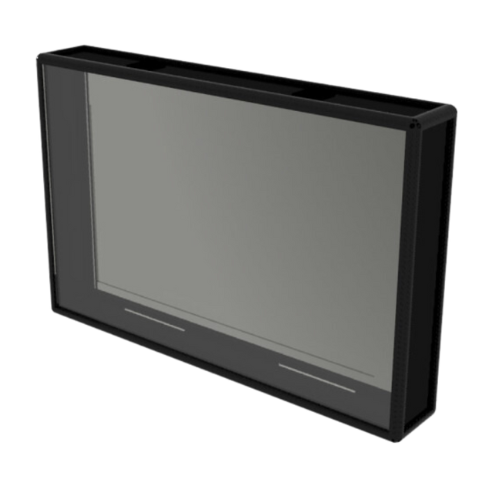
A full metal-framed casing that surrounds the entire television, with a thick 6mm clear acrylic panel across the front. Australian-made. Designed for environments where impact is likely or where tamper-resistance matters.
- Reinforced metal frame around the full TV perimeter
- 6mm thick clear acrylic front panel
- Protects all sides, not just the screen face
- Australian made
- Best for high-risk or high-impact environments
TV Screen Protector
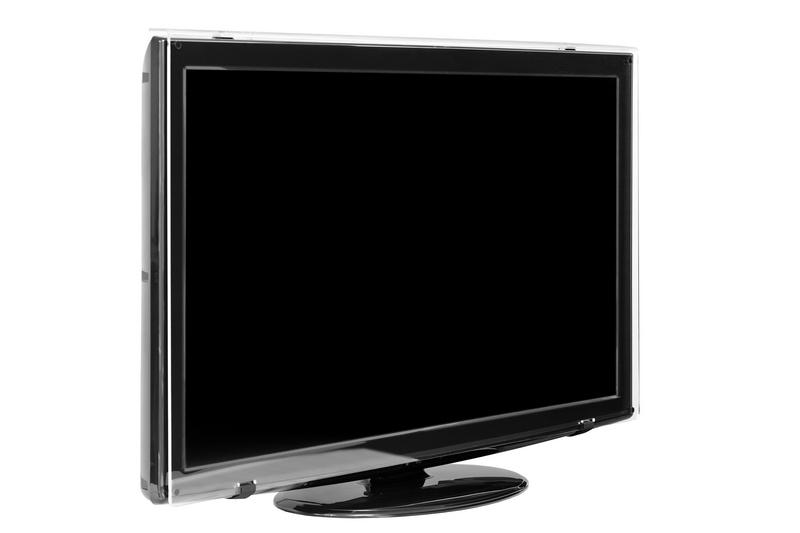
A clear perspex sheet that fits flush over the front of the television screen. Lightweight and unobtrusive. Protects the screen from scratches, minor impacts, and everyday wear without enclosing the whole unit.
- 3mm or 4.5mm perspex sheet over screen face only
- For 3mm, choice of clear or anti-reflective
- Low-profile and visually unobtrusive
- Protects against scratches and light to moderate impacts
- Wide range of sizes available
- Best for lower-risk or aesthetic-sensitive environments
65" and smaller — all locations in Australia
75" and 85" — Melbourne area only
Find out more & request a quoteA note on picture quality
Both products use optically clear materials — acrylic and perspex — specifically chosen to preserve picture quality. In the vast majority of settings, clients and support workers report the change in viewing quality is negligible. If a client has a visual impairment that makes them particularly sensitive to glare or colour shifts, factor this into your recommendation.
“My oldest son is almost entirely non-verbal with Down Syndrome and level 3 autism. Watching his favourite shows on TV is an essential part of his day. Over the last couple of years he has experienced increased levels of frustration with the challenge of communicating his needs and feelings without being able to talk. This resulted in several TV screens being broken.
After number four, I realised I couldn’t just keep buying “disposable TVs” going forward. I remarked to one of his carers that it would be good if there was such a thing as a TV screen protector. When he said he had seen them at special needs schools here in Canberra I started Googling and hit upon Maximise Technology as being a company that manufactured exactly what I was after.
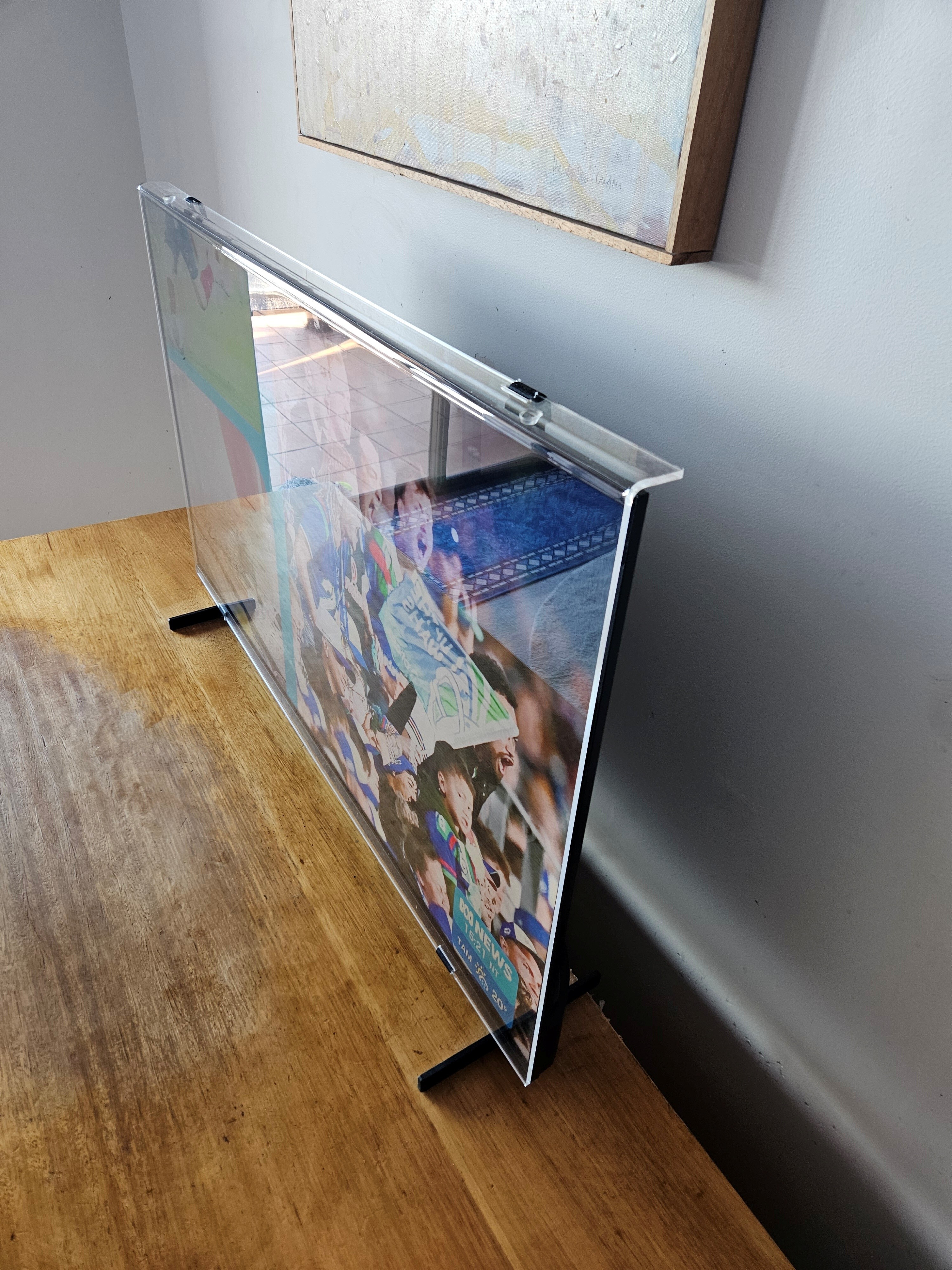
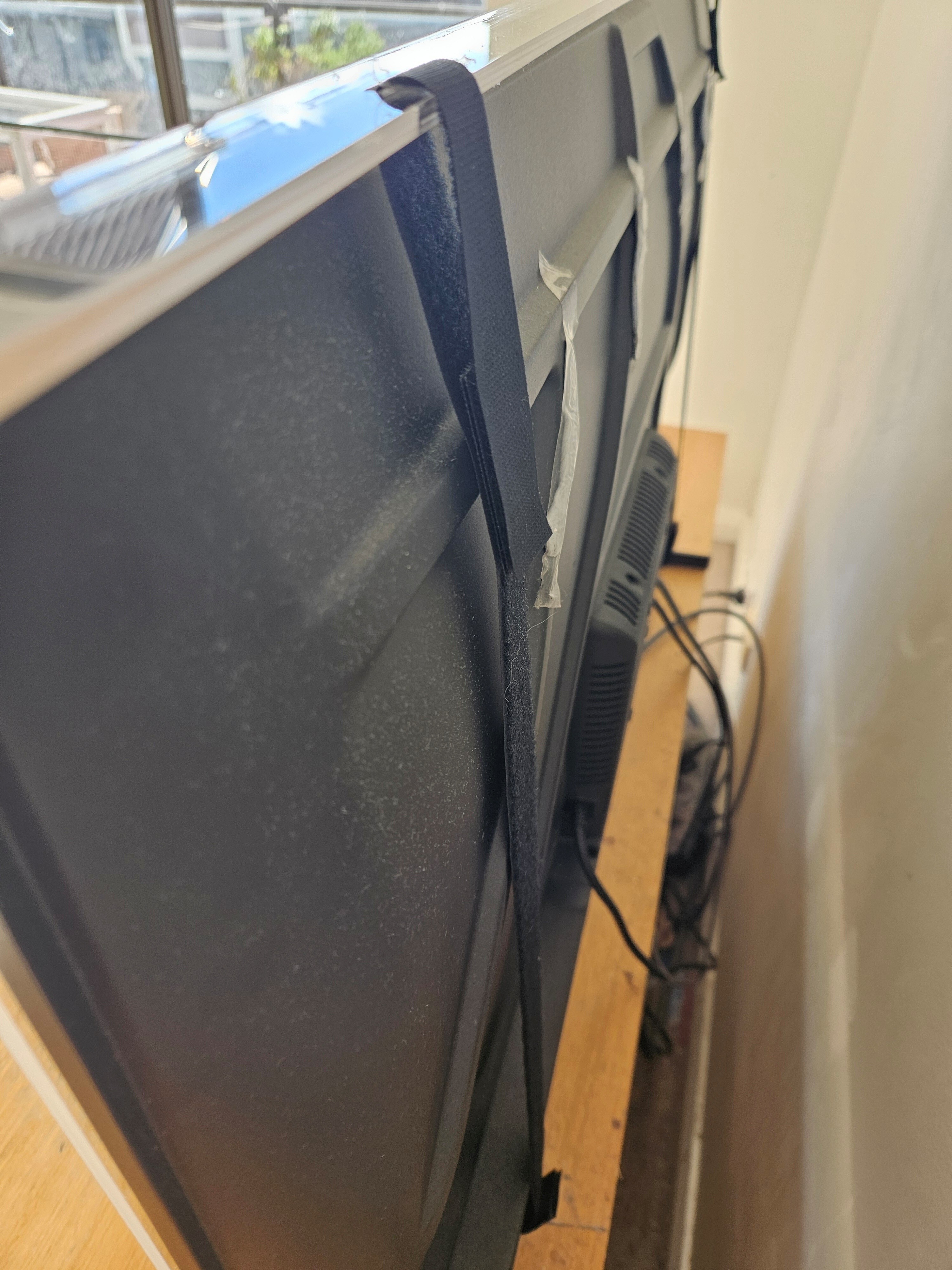
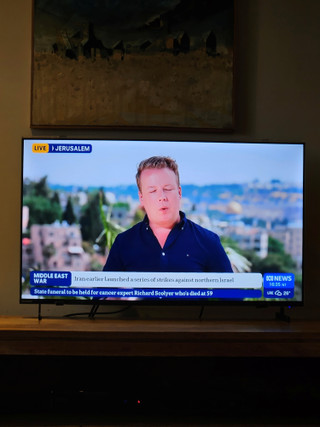
I now have a 4.5mm acrylic screen protector custom-made for my exact model of TV. It fits perfectly, quickly and easily with the supplied straps and Velcro. You can barely notice it from the front, and there is no reduction in picture quality. I am so happy with this product and highly recommend it for parents and carers of children with special needs where screen breakages are more likely.”
Choosing the right option for your client
The decision between a Heavy Duty Enclosure and a Screen Protector typically comes down to three things: the level of risk in the environment, the size of the television, and whether full perimeter protection is needed or just screen-face coverage.
Scenario 1: Client with behaviours of concern involving objects or physical contact with furnishings
Where a participant's support plan identifies risk of deliberate or impulsive contact with household objects, a screen-only protector is unlikely to be sufficient.
Recommendation: Heavy Duty EnclosureScenario 2: Shared disability accommodation with multiple residents and high traffic
In SDA or group home settings, the television is often in a communal lounge used heavily throughout the day. Accidental bumps, cleaning, and general wear are ongoing risks.
Recommendation: Heavy Duty EnclosureScenario 3: Client living independently who has experienced one accidental screen damage incident
Where the environment is generally low-risk but there has been a past incident — a remote thrown, an object falling — a screen protector adds meaningful protection without being visually intrusive.
Recommendation: TV Screen ProtectorScenario 4: Client with a physical disability who uses mobility aids near the TV
Wheelchairs, walking frames, and other mobility aids can make accidental contact with a TV stand a regular occurrence. A screen protector guards against scratches and moderate impacts.
Recommendation: TV Screen ProtectorScenario 5: Aged care or supported living where the TV is wall-mounted in a lower-risk environment
A wall-mounted screen at height in a calmer environment is less vulnerable to ground-level contact. A screen protector here offers sensible, cost-effective protection.
Recommendation: TV Screen ProtectorScenario 6: Respite house or short-stay accommodation with diverse client groups
Respite settings host a wide range of participants with varying needs and risk profiles. Because the support team can't always predict risk levels, the higher protection threshold of the enclosure is usually the appropriate default.
Recommendation: Heavy Duty EnclosureSize matters — measure before you order
Television screen sizes are measured diagonally, corner to corner across the screen face — not the outer bezel of the TV unit. When selecting a product, confirm the screen diagonal measurement of the client's television rather than relying on the model name alone, as many televisions with the same nominal size vary in actual screen dimensions. The enquiry form on each product page is where you provide this detail when requesting a shipping quote.
Why these products are relevant for NDIS participants
Television damage can represent a significant unexpected cost for NDIS participants, particularly those on fixed incomes or those for whom a TV replacement would require plan spending that wasn't budgeted. A screen protector or enclosure is an upfront investment that prevents a larger, unpredictable expense later.
For participants whose behaviour support plans identify risk of property damage, these products may also be directly relevant as an environmental modification or low-risk prevention strategy — worth discussing with the participant's support coordinator or behaviour support practitioner.
Shipping is quoted individually for these products
Because TV Screen Defender products are large, heavy items, shipping costs vary based on your location and the specific product. Each product page includes an enquiry form — submit your details and requirements and Maximise Technology will provide a shipping quote before your order is finalised. Visit the TV Screen Defender product pages to begin your enquiry.
Summary
TV screen protectors fill a practical and often overlooked need in disability support environments. Whether the goal is preventing screen damage in a high-risk supported accommodation setting or adding a layer of protection to a client's much-relied-upon television at home, the range has options for a wide variety of situations.
The Heavy Duty Enclosure (55", 65" and 75") is the right choice where the risk of forceful impact is real and where perimeter protection matters. The flat Screen Protector (32" to 85") is a lower-profile option suited to moderate-risk environments and a wider range of TV sizes.
Shipping on all products is quoted on enquiry — use the form on each product page to get a quote for your client's location and chosen size.
Browse TV screen protectors
View the full range, select the right size, and submit your shipping enquiry directly from each product page.
View All TV Screen ProtectorsNDIS invoicing available · Registered NDIS Provider · Government & school orders welcome